AI RFP response software
Stop starting every RFP from scratch.
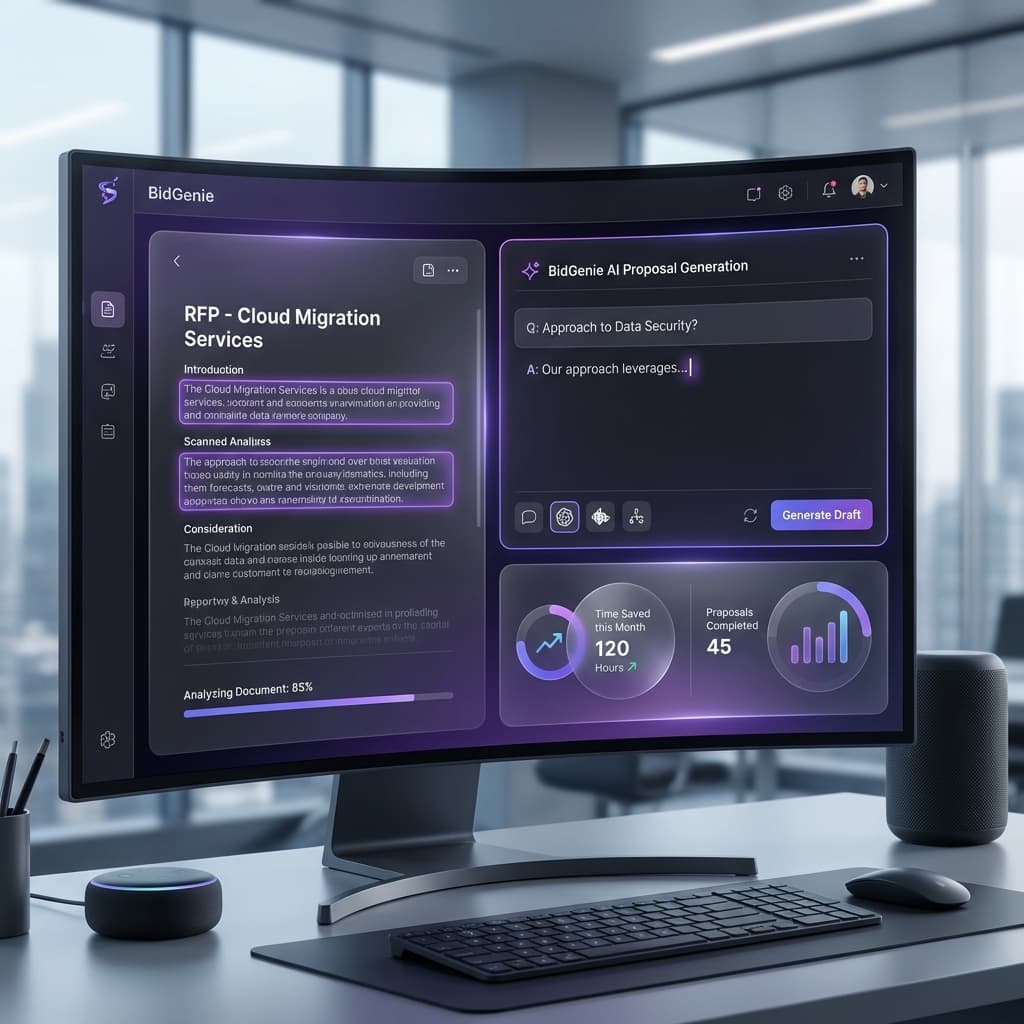
BidGenie helps lean proposal, sales, and security teams upload a real file, extract the work, draft from approved answers, review with humans, and export in one workflow.
For proposal teams
Reduce search-and-paste work, get faster first drafts, and keep review rigor intact.
Explore workflowFor sales and security responders
Handle DDQs and security questionnaires with approved-answer reuse and clearer review routing.
Explore workflowFor manual workflow teams
Move off scattered Word docs and spreadsheets without taking on a heavyweight implementation.
Explore workflowWhat buyers can verify quickly
The public story is now tied to a visible workflow and resource system instead of unsupported claims about instant autonomy or fixed setup promises.
Where trust comes from
Approved-answer reuse, human review, and clearer export readiness are positioned as the trust model rather than black-box completion.
How to evaluate fit
Buyers can route into category pages, compare pages, resources, pricing, and demo paths based on urgency and buying stage instead of being pushed into a single CTA.
Workflow proof, not black-box promises
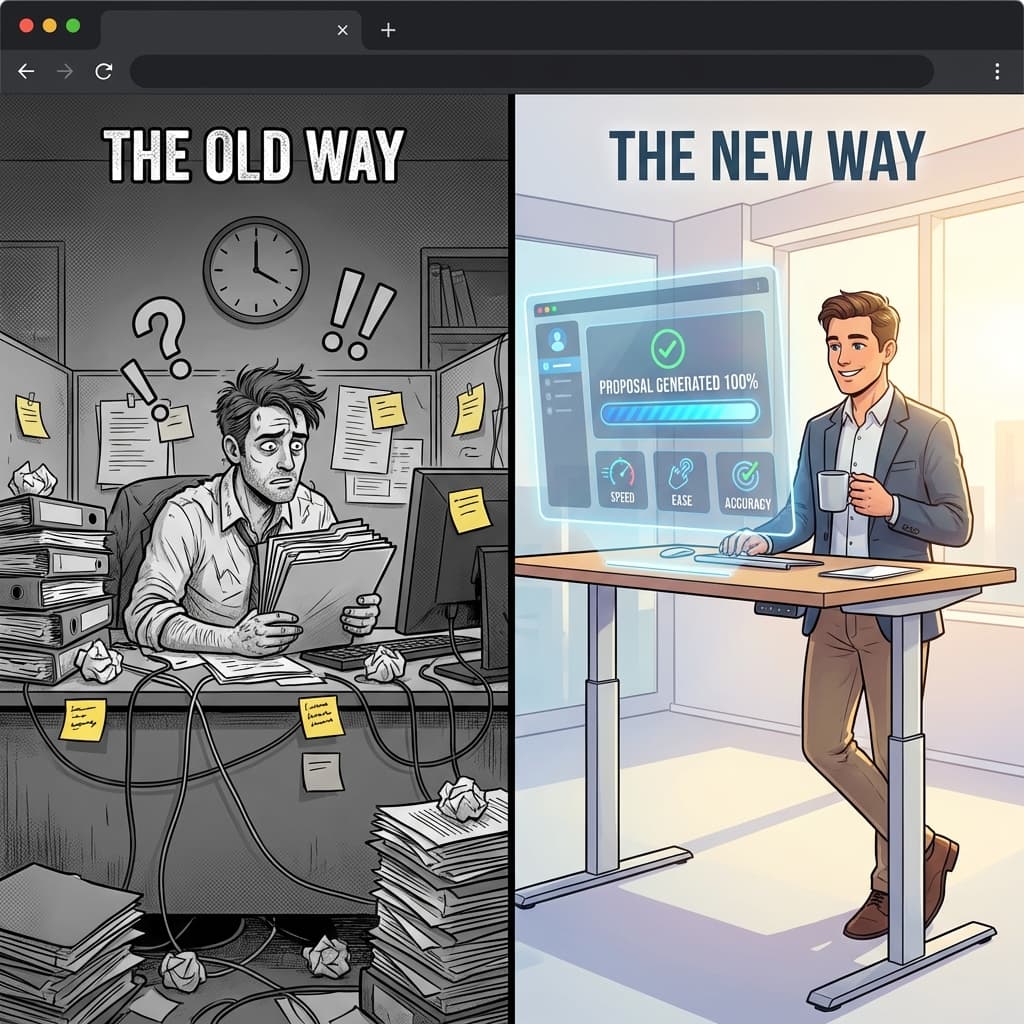
The site now centers the actual response flow and the trust boundary: approved answers, human review, and export after validation.
Upload
Start with an active RFP, DDQ, or security questionnaire instead of a blank page.
Extract
See every question and requirement in a structured workflow early.
Draft
Build a first pass from approved answers and current context.
Review
Keep SMEs and approvers in control of the final language.
Export
Send a submission-ready package in the formats teams already use.
Product-grounded proof
Question extraction comes first
The workflow starts by structuring the actual request so the team can see what has to be answered before drafting quality becomes the bottleneck.
Approved answers anchor the first pass
Reuse is framed as a drafting accelerator built on existing approved content, not as a reason to skip human judgment.
Export is part of the proof story
The site now treats export readiness as evidence of workflow completeness, not just a cosmetic endpoint after marketing copy.
Trust and proof architecture
- Ground the first draft in approved answers and current response context.
- Keep human approval and reviewer routing visible before export.
- Use checklist resources to validate completeness, compliance, and submission readiness.
- Keep public security wording aligned with the security page.
Trust boundaries
- BidGenie runs on infrastructure providers with independent certifications; the product does not claim its own SOC 2 audit unless that changes.
- The free-plan wording is standardized around 60 one-time credits.
- Commercial pages emphasize workflow fit and review control instead of unsupported competitor or activation claims.
Upload and structure
Start from a live buyer document so the work surface is grounded in the actual request rather than a recreated checklist.
Draft from approved answers
Use existing institutional language and context as the starting point so the first pass reflects what the team already knows.
Review before export
Keep SMEs and approvers in control of the final submission instead of implying the system should act without human judgment.
Who is BidGenie best for?
BidGenie is built for lean proposal, sales, and security teams that need grounded first drafts and human review without heavyweight legacy tooling.
What can a buyer actually verify on the site?
The site is structured around a visible workflow story, governed trust language, pricing guidance, comparison pages, and resources tied to active response work. The intent is to help buyers inspect how the product fits before they commit to a deeper evaluation.
Can our team review every answer before submission?
Yes. BidGenie is designed for source-grounded drafting with human review, approvals, and final edits before export.
Can we use existing proposals and approved answers?
Yes. BidGenie is positioned as a way to activate existing content faster, not force teams to rebuild everything from scratch.
How should we think about security claims on the site?
Public security language should stay aligned with the security page: BidGenie uses layered controls and runs on audited infrastructure providers, but does not claim its own independent SOC 2 audit unless that changes.
When should a buyer start free instead of booking a demo?
Start free when one operator can test the workflow with a live file and the main question is product fit. Book a demo when migration shape, stakeholder alignment, review governance, or procurement questions are part of the buying process.
See the workflow with your buying stage in mind
Start with a real file if you want to test the product, or book a walkthrough if you are comparing workflows and migration paths.