BidGenie vs PandaDoc
Compare response workflow tooling against document execution tooling
PandaDoc is often part of a sales-document workflow. BidGenie is positioned for teams working through complex RFPs, DDQs, and security questionnaires that need answer reuse, drafting support, and review control before export.
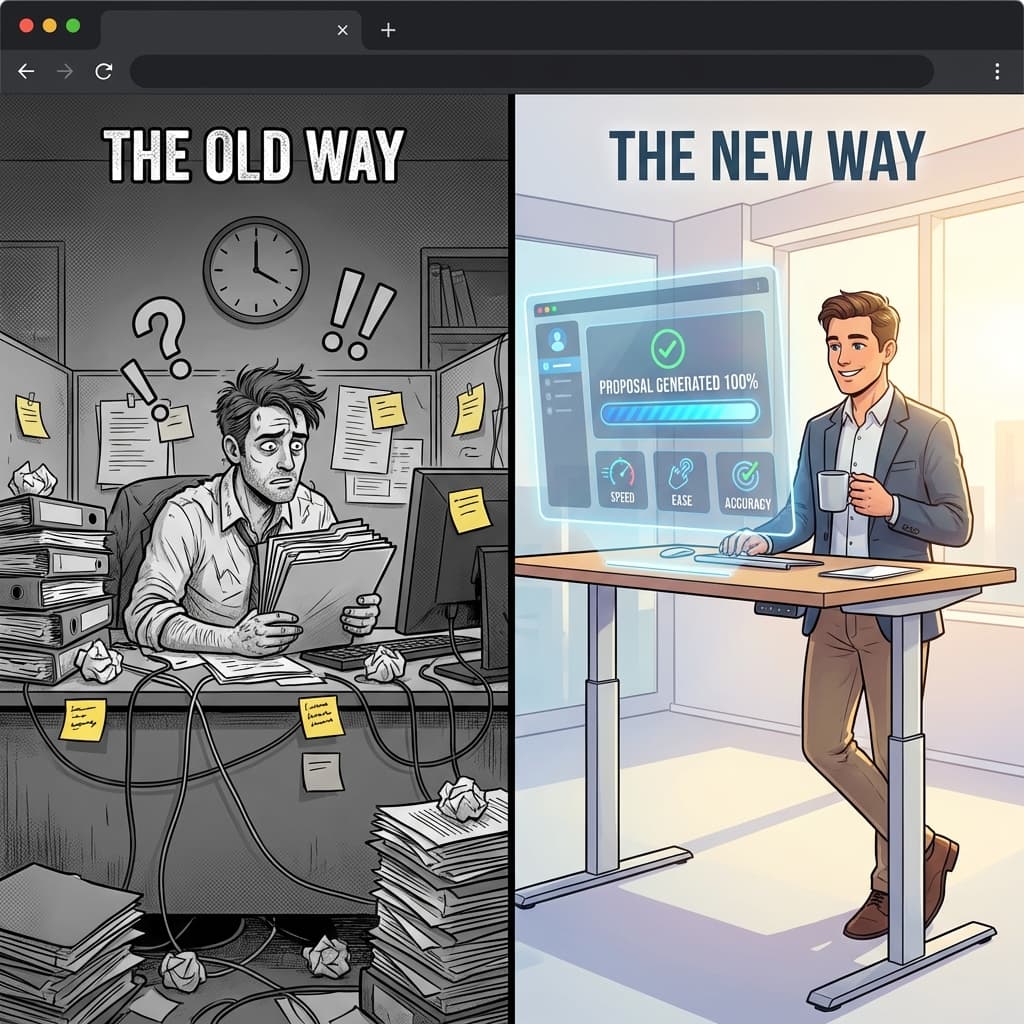
PandaDoc comparisons are usually about choosing between document execution tooling and purpose-built response workflow tooling.
Who each tool fits
PandaDoc can be a better fit when the main need is sales-document preparation, approvals, or signature workflows.
Watchout in the legacy model
It is not positioned as a purpose-built response system for repeated RFP and questionnaire work.
Where BidGenie is different
BidGenie is framed around the complexity of RFP, DDQ, and security response workflows where approved-answer reuse, drafting support, and review discipline matter more than document execution alone.
Fit comparison
Best fit
PandaDoc: Quotes, contracts, and sales-document execution
BidGenie: RFPs, DDQs, and security questionnaires
Primary strength
PandaDoc: Document presentation and execution flow
BidGenie: Question handling, answer reuse, and review-ready drafting
Evaluation focus
PandaDoc: Sales-document workflow
BidGenie: Complex response workflow and submission preparation
Migration friction reducers
- Start with one active response instead of a full platform migration.
- Bring existing approved answers and documents into the new workflow incrementally.
- Use demo-led evaluation when multiple stakeholders need to compare review models or rollout risk.
When not to choose BidGenie
- Simple quote or signature-only workflows
- Teams whose primary buying need is document execution rather than response creation
Proof path
- Use the product workflow pages to see how intake, drafting, review, and export are framed.
- Use checklist and migration resources for neutral proof before a tool decision.
- Use a demo when multiple stakeholders need to validate rollout shape or review governance.
Signals to stay with PandaDoc
- Your buying need is mostly document presentation, approval, or signature execution.
- The core workflow is simple sales-document handling rather than repeated response creation.
Signals to evaluate BidGenie
- The team is handling RFPs, DDQs, or security questionnaires with meaningful review complexity.
- Answer reuse, drafting support, and submission readiness matter more than quote or signature flow.
FAQs
Who should keep PandaDoc?
PandaDoc can be a better fit when the main need is sales-document preparation, approvals, or signature workflows.
Where does BidGenie differ from PandaDoc?
BidGenie is framed around the complexity of RFP, DDQ, and security response workflows where approved-answer reuse, drafting support, and review discipline matter more than document execution alone.
What is the lowest-friction way to evaluate a switch?
Start with one active response, bring existing approved answers into the workflow incrementally, and use demo-led review if multiple stakeholders need to validate the rollout shape.
Choose the evaluation path that fits the buying stage
Start free if you want to test the workflow with a live file. Book a demo if you are comparing rollout shape, review governance, or migration risk across stakeholders.